
The planning of this kitchen took longer than the construction itself, and I think that’s how it should be. Before we touched a wall, I wanted to understand how this home was going to live — how the family would move through it, where light would land at different times of day, where you’d want to stand with a coffee in the morning and where you’d want to gather at night. The kitchen wasn’t just a room to be renovated. It was the decision that would shape everything else on the first floor.
More than any material, fixture, or finish, the floor plan is the decision that determines whether a kitchen feels right. Everything else can be changed; the bones cannot.
This kitchen was part of a larger first floor renovation in a 1940s home in Aurora near Town Park, but moving and reimagining the kitchen was the heart of the project — and the decision that made the rest of the layout fall into place.
Rethinking the Original Floor Plan
The home’s original layout placed the kitchen near the front of the house, with two small bedrooms occupying the back. It was a layout that made sense when the home was built, but didn’t reflect how the family wanted to live now. The kitchen felt closed off from the rest of the main floor. The back of the home — where the patio doors opened to the garden — was tucked behind walls and unused for the daily rhythm of the house.
When I started the planning process, the question wasn’t how do we update this kitchen. It was where does the kitchen actually belong in this home.
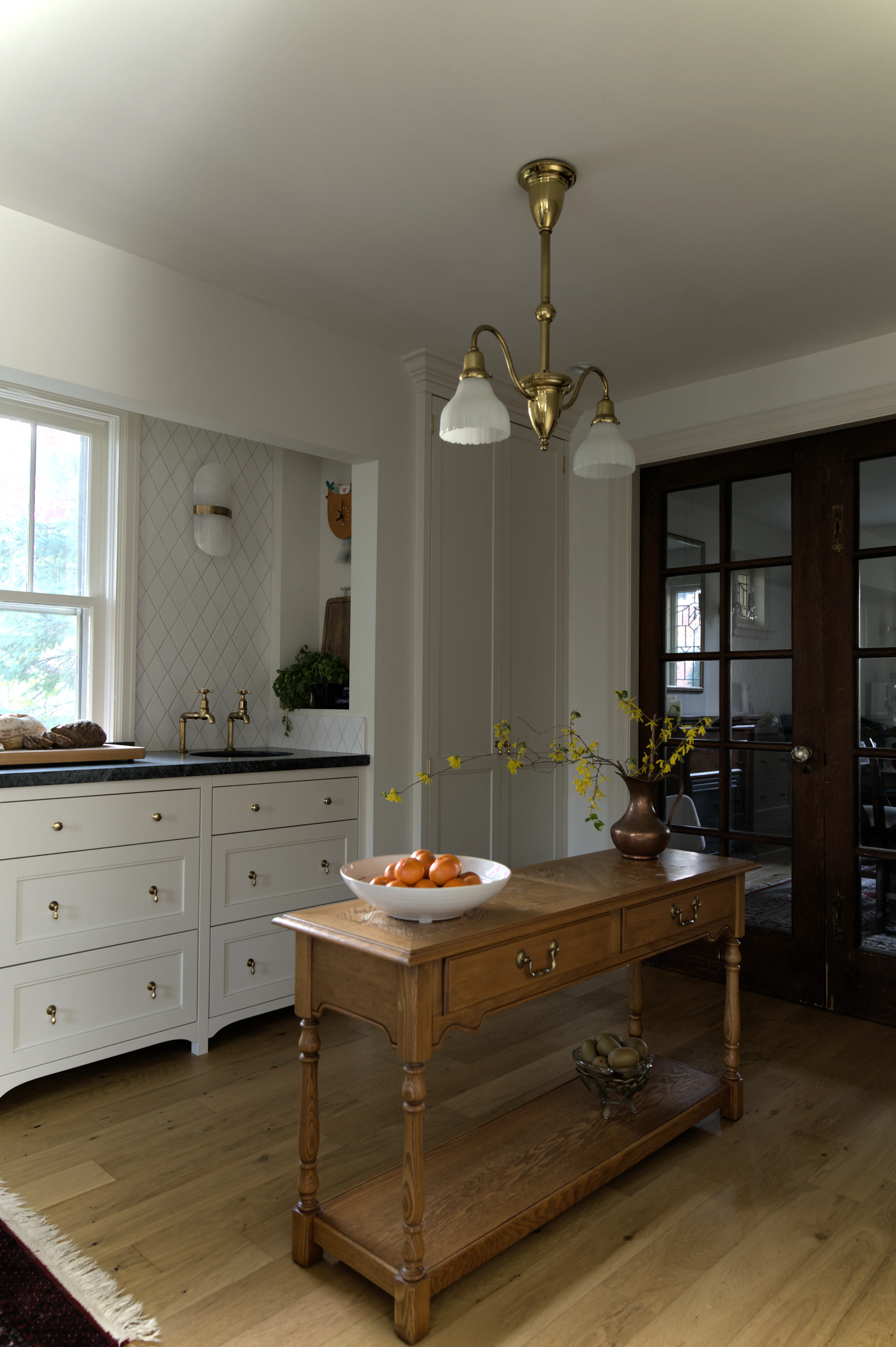
A vintage prep table sits at the centre of the kitchen, anchoring the room between the working wall and the original French doors.
Designing for Flow Between Rooms
I’ve always believed a home should feel like a series of considered rooms, each with its own purpose. I’m less drawn to fully open-concept floor plans where every space dissolves into the next. What I love instead are layouts that let you look from one room into another and catch a small vignette — a corner of a dining table, the edge of a sofa, light falling on a piece of art.
That kind of layered view only works when each room has been planned with intention. So before we made any structural decisions, I mapped out how the entry, dining room, family room, and kitchen would relate to one another. The kitchen had to anchor the back of the home — but it also had to connect visually and functionally to the rest of the main floor, including the original French doors that lead into the dining room.
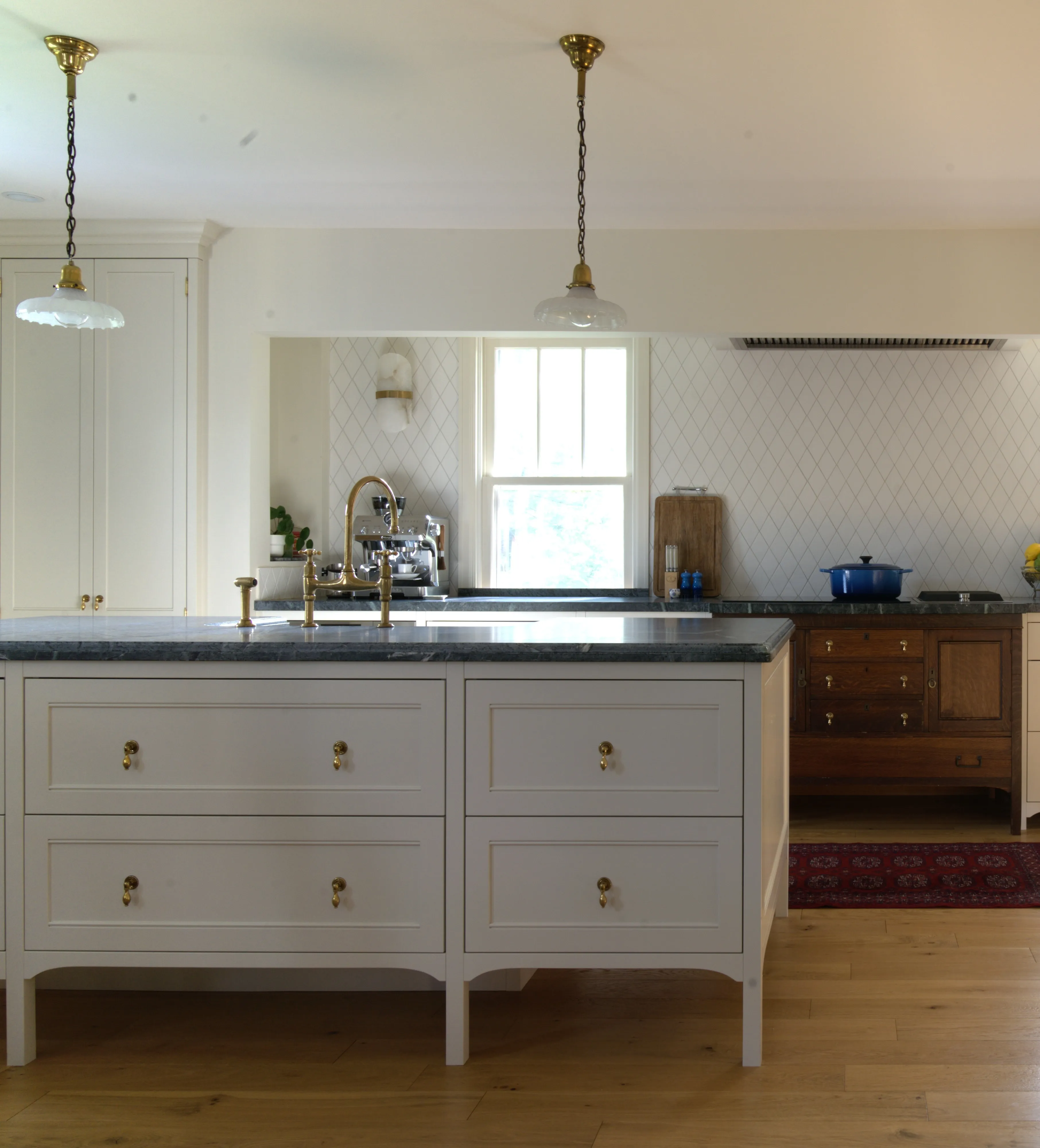
The island, range wall, and integrated antique oak sideboard, working together as one room.
Why the Back of the Home
Moving the kitchen to the back of the house wasn’t just about square footage. A few things made it the right call:
- Natural light. The back of the home faces the garden, with the best light of the day pouring in through the patio doors. Kitchens are working spaces, and good light makes them better in every way.
- Connection to outdoors. Placing the kitchen off the patio means summer cooking, entertaining, and family meals all flow naturally between inside and out.
- Family rhythm. A back-of-home kitchen becomes the heart of daily life — not a room you pass through on your way to somewhere else, but the room you arrive at.
The previous location of the kitchen never let it become the centre of the home. Moving it to the back changed that immediately.
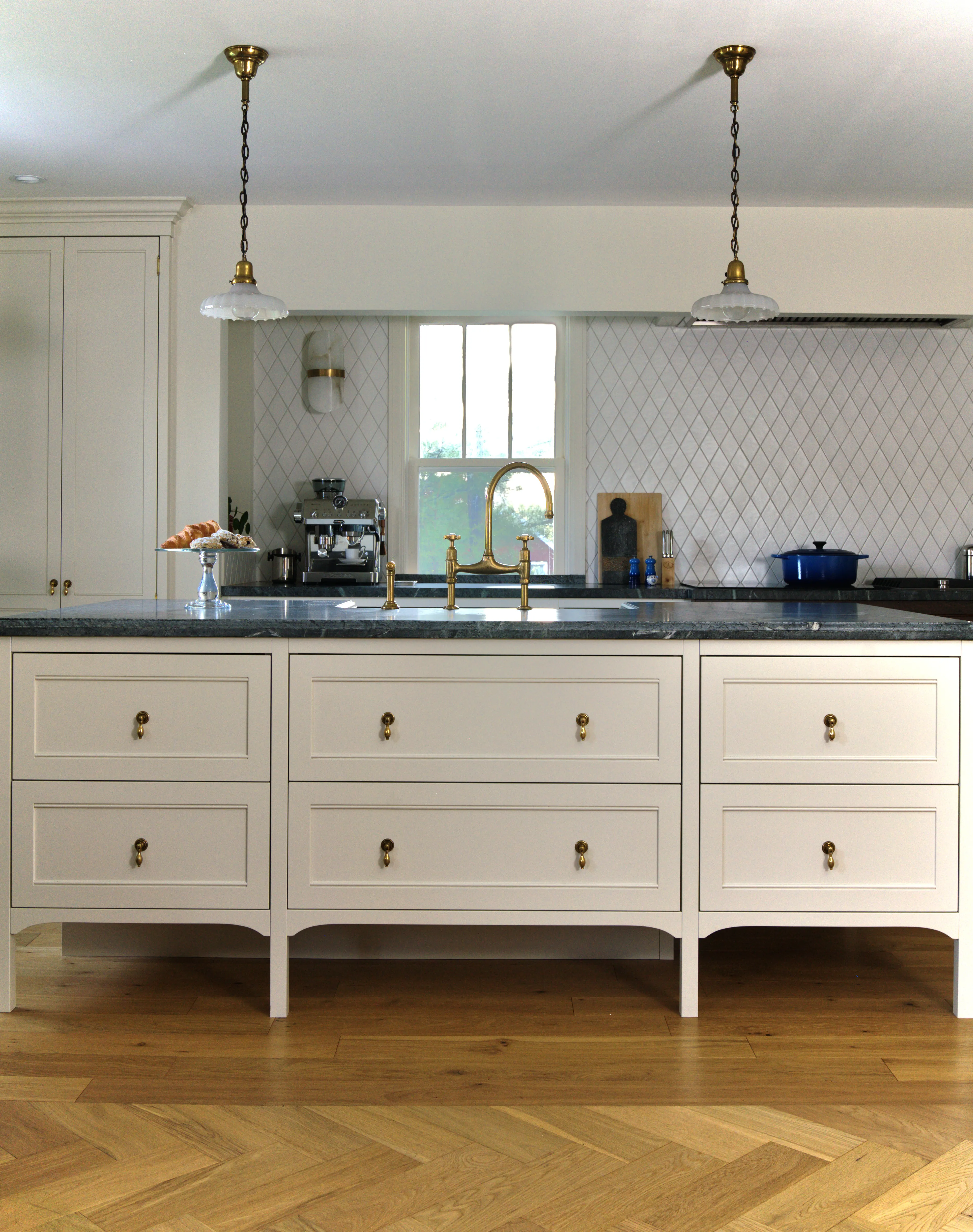
The kitchen at the back of the home, with light from the garden and a Fantasia soapstone island at its centre.
Opening Up the Floor Plan
To make the new kitchen work, we needed to take down structural walls and replace them with beams. This kind of structural change is something I always plan carefully with the team and an architect — it’s one of the reasons I encourage clients to bring a designer in early, before the first hammer swings. The decisions made in the planning phase shape everything that follows.
Removing the walls opened the floor plan enough to let the kitchen breathe and connect to the rest of the main floor, while still keeping defined rooms. The beams are doing structural work, but they also became part of the design — a quiet way of marking where one room ends and the next begins.
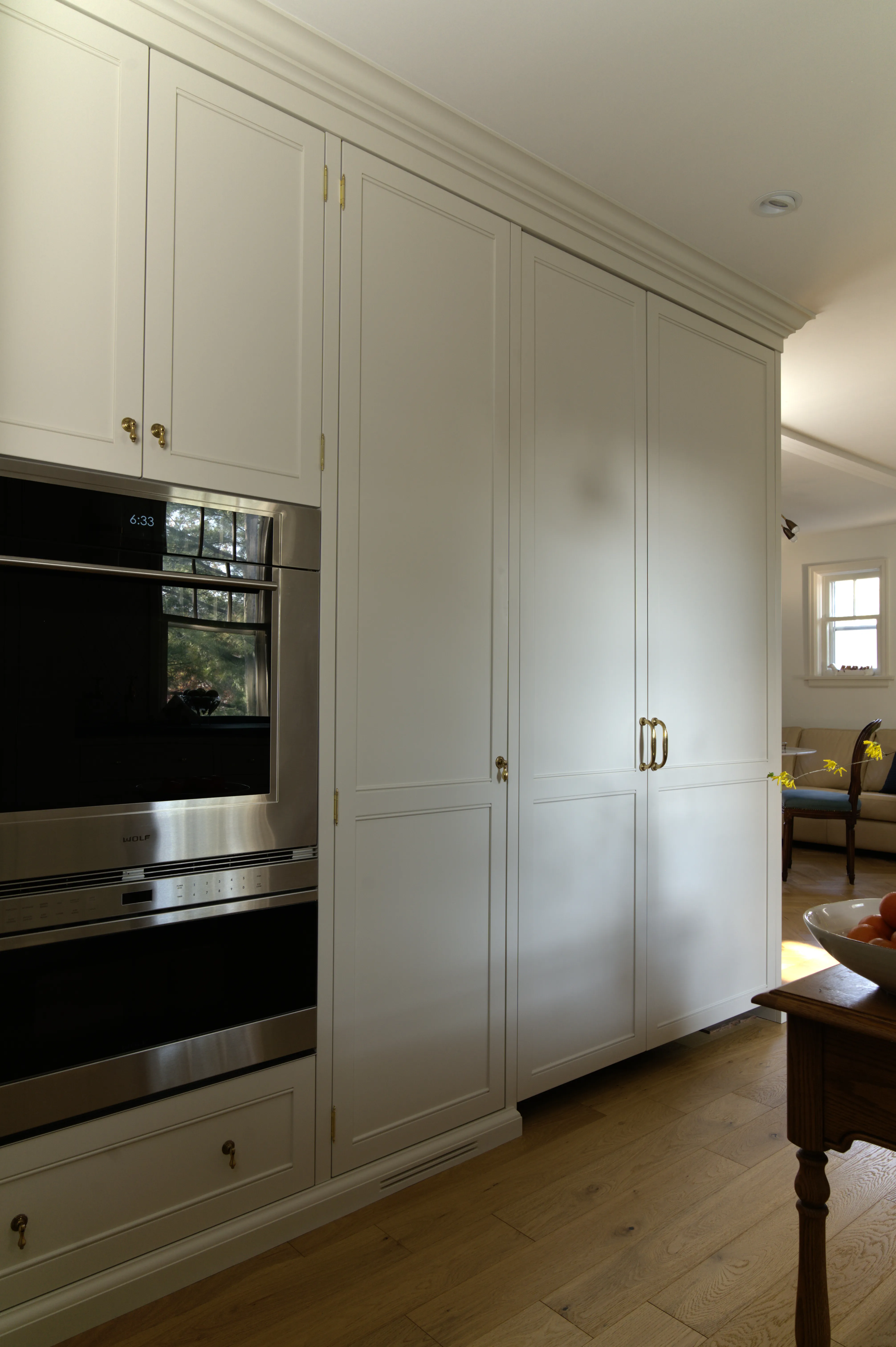
The pantry wall, with integrated appliances and floor-to-ceiling cabinetry.
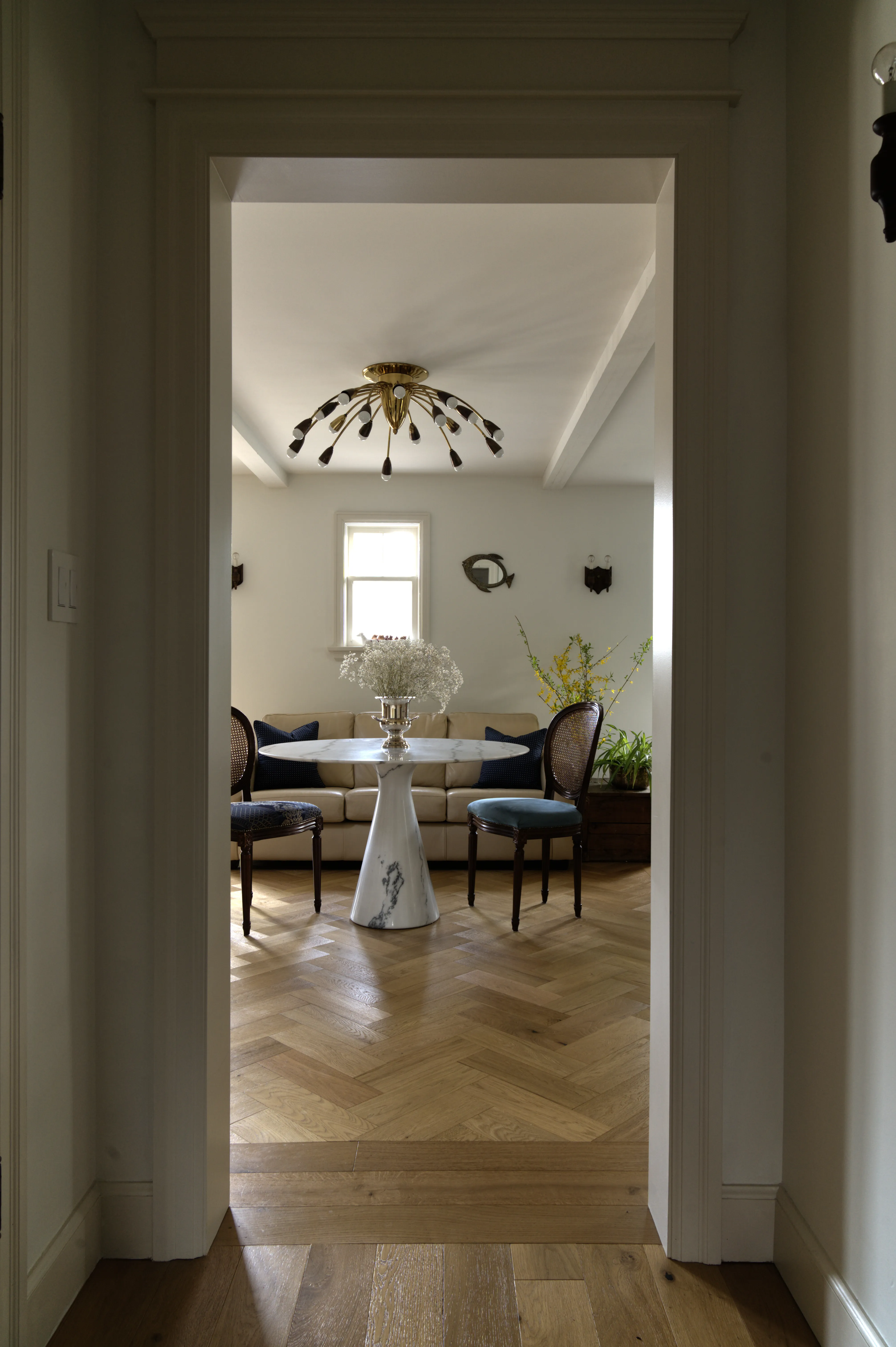
Looking into the breakfast nook, just off the kitchen.
Where the Kitchen Is Now
The kitchen is largely complete and the family is living in it, cooking in it, gathering in it. There are still a few small details I want to refine before I’d call it truly finished, which I think is the nature of any project I care about. There’s almost always one more layer of consideration that improves a room.
What’s already clear is that the planning was the most important decision we made on this project. Every material, every finish, every piece of millwork was easier to choose because the bones of the room were right from the start.
I’ll be sharing more about this Aurora kitchen renovation in upcoming posts — including the materials and finishes that gave the room its character (Fantasia soapstone, deVOL brass taps, custom shaker cabinetry, and a handmade diamond tile backsplash), the heritage details we preserved from the original 1940s home, and the small breakfast nook tucked just off the main space.
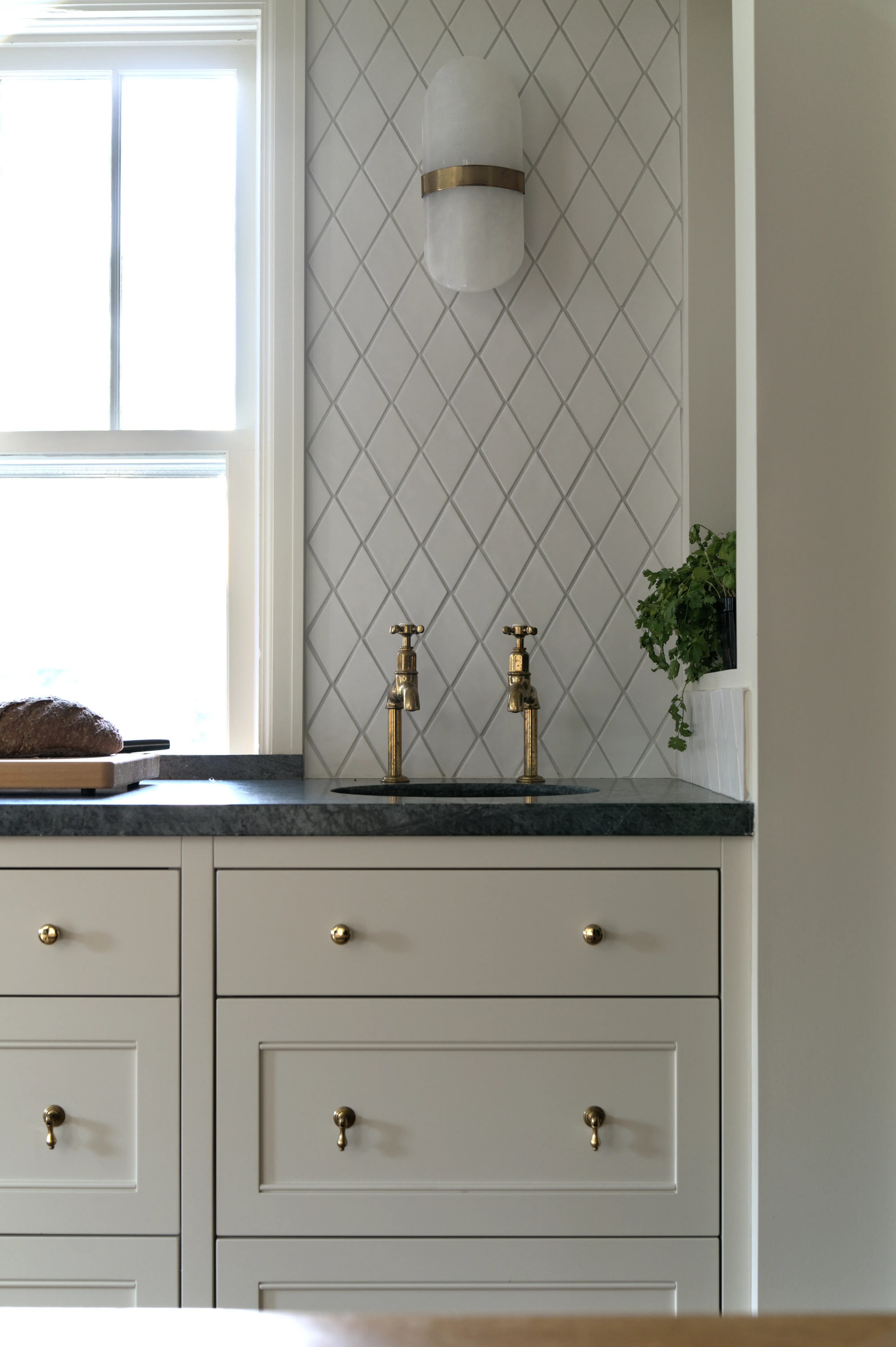
deVOL Mayan taps in aged unlacquered brass at the secondary sink — more on the materials in the next post.
If you’re considering a renovation of your own and you’re in Aurora or the Greater Toronto Area, I’d love to hear about your project. The earlier the planning starts, the more thoughtful the result tends to be.